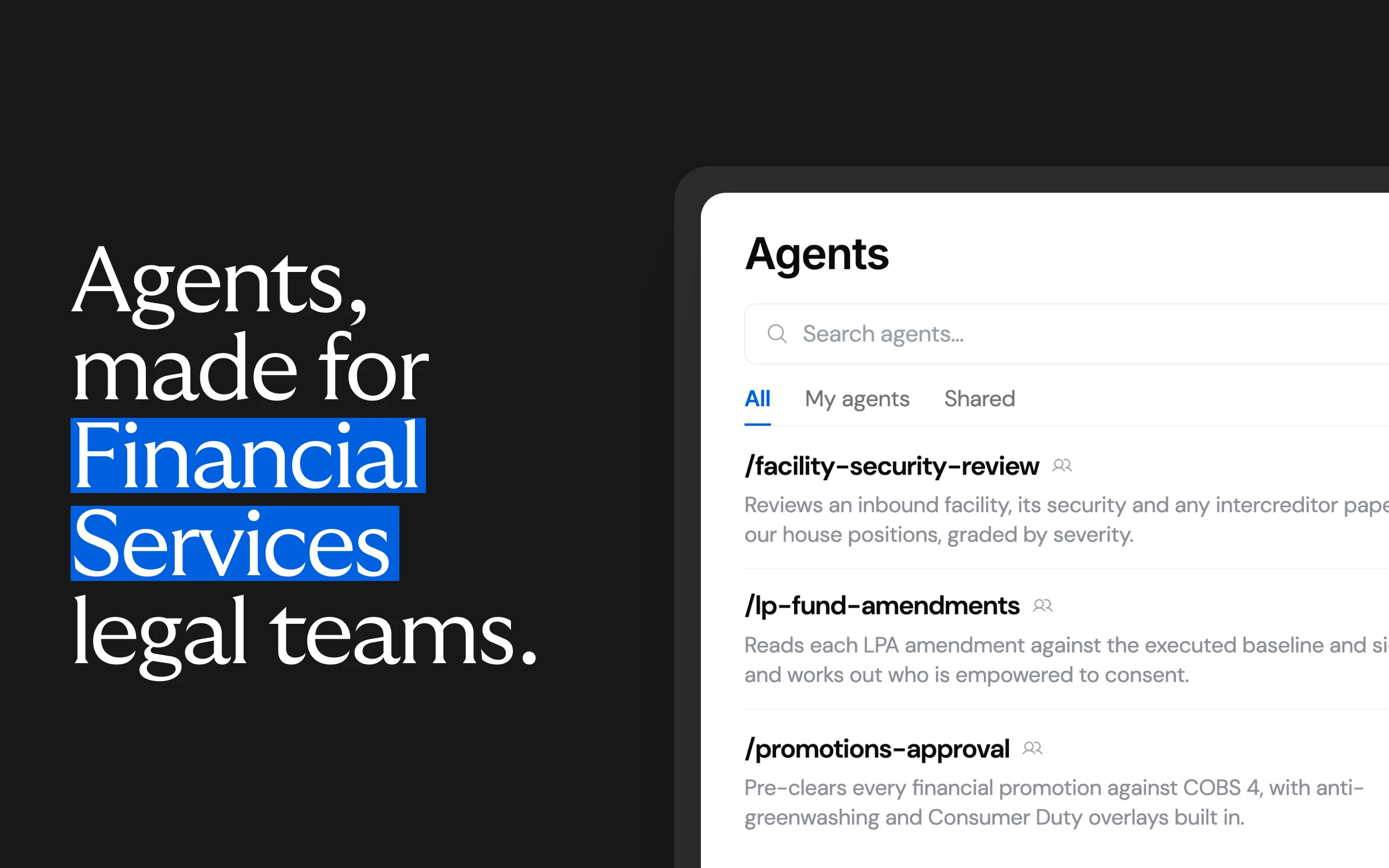
Financial services legal teams are not short of standards. The hard part is applying them to each new matter, in order, without asking a lawyer to repeat the same checks.
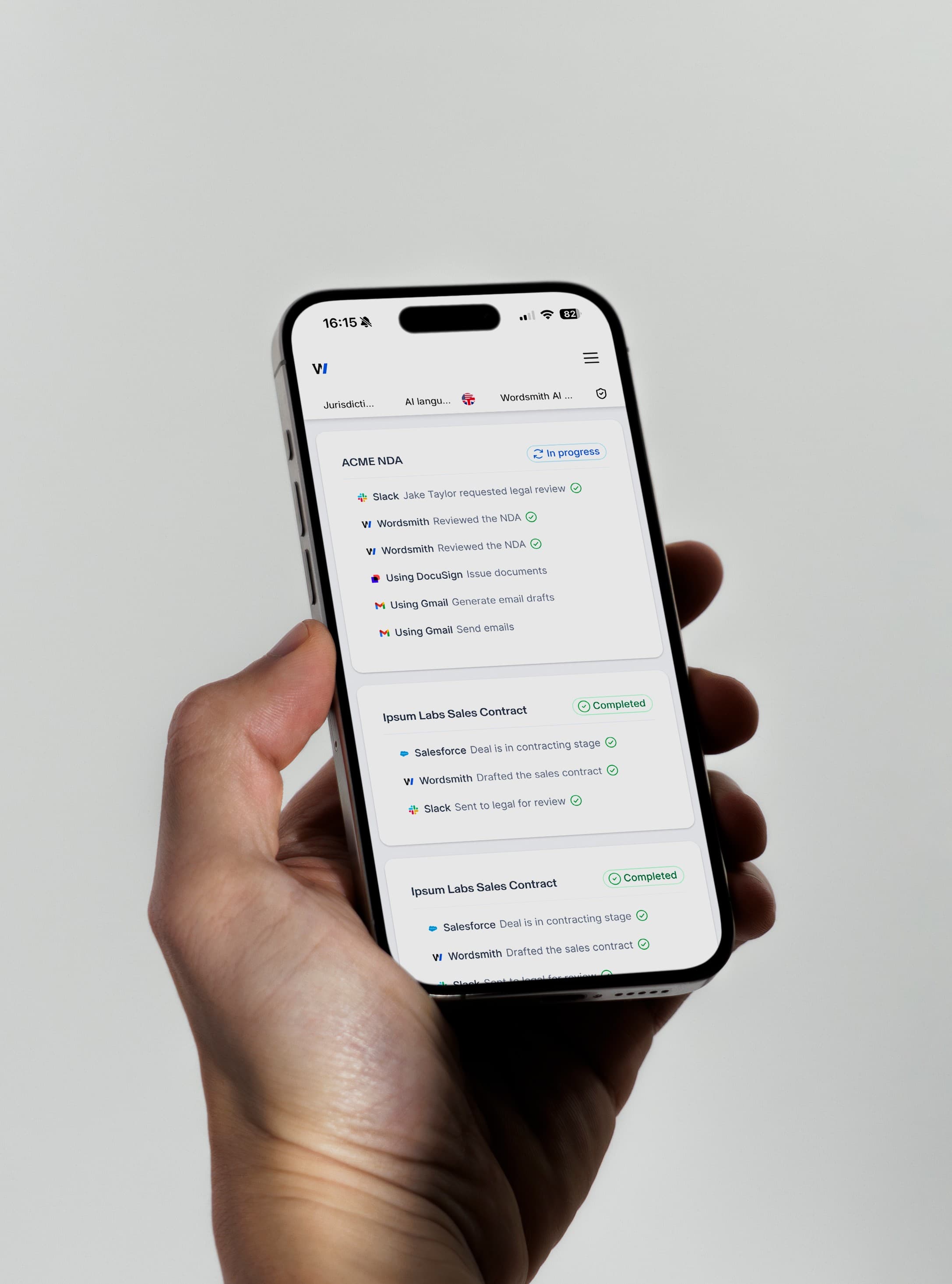
A Wordsmith Agent owns that recurring workflow. Work arrives by email or chat, the Agent gathers the material, follows the team's process, prepares the output and routes decisions to the right person. Every step is recorded, and a human stays in control.
This article follows three of those workflows:
- Reviewing a facility agreement, the main contract between a lender and borrower.
- Responding to a change or approval request for a fund agreement.
- Checking a financial promotion, marketing copy requiring approval.
The value lies between arrival and decision. Instead of opening several files, finding the latest guidance and building a first draft, the lawyer starts with an organized review and a clear list of decisions.
That matters because recurring work rarely arrives neatly. Documents sit across inboxes and folders, context comes in separate messages, and deadlines keep moving. The Agent brings those pieces together before the lawyer starts.
A facility agreement has no universal right answer.
At a bank or specialist lender, a borrower sends documents for a new loan, including a facility agreement and deal terms. Before negotiation, the legal team must identify what arrived and decide which bank positions apply.
The submission triggers the facility review Agent. The workflow classifies attachments, confirms the documents came from the other side and selects the review rules. The Agent gathers approved terms, previous wording and deal instructions before checking the draft section by section.
The output is a marked-up draft and an issue table showing the bank's usual position, the borrower's wording and the recommended next step. Straightforward differences are corrected; negotiation points are explained and ranked for the lawyer.
One recorded run covers intake, classification, source gathering, review and escalation. The lawyer receives the draft and issue table, then moves to the questions that need experience: which points matter, where there is room to move and what must go to a specialist.
On a separate schedule, the Agent compares completed deals and shows where the bank has accepted different positions. The team sees recurring risk without reopening every agreement by hand.
Nothing leaves automatically. The Agent returns a sourced draft, and a named lawyer decides what goes out. For the deal team, that means less waiting and a consistent starting point.
The fund agreement sets the approval rules.
The second workflow sits in private capital. A pension fund, family office or other institutional investor receives a request from a fund manager to amend a signed fund agreement. The answer depends on the current agreement, separate investor terms and earlier consents.
The request triggers the fund change Agent. The workflow identifies the fund, retrieves the current documents and checks that the set is complete. If something is missing, the review stops and lists what is needed. No recommendation is based on an old version.
Once the record is complete, the Agent separates the request into individual changes. Each row explains what moved, how the change affects the investor, who must agree and when. Where separate investor terms change the answer, the relevant wording appears beside the analysis.
The result is one cited table, with a row for every change. The lawyer no longer moves between long documents or rebuilds the reasoning elsewhere. The review is easier to check and share later.
The workflow moves from intake through document retrieval, a completeness check and cross-document analysis, then produces a recommendation and evidence pack. Each step feeds the next.
Approval remains a human decision. Money, investor rights and other judgment calls stay with the lawyer or investment team. The Agent brings the evidence and decision together.
A financial promotion depends on its audience.
For legal and compliance teams at banks, asset managers, insurers and consumer credit firms, financial promotions create a steady review queue. Adverts, web pages, email campaigns and social posts arrive with different audiences, products and deadlines. The words cannot be checked in isolation.
Marketing submits each promotion by email or chat, triggering the financial promotion Agent. The workflow identifies the audience, product and channel, applies the firm's policy, required warnings and approved examples, then grades each problem red, amber or green. Legal receives a short explanation, the source for the check and the edit needed.
Instead of sending comments back and forth, the Agent builds one approval pack containing the draft, issues, proposed changes and source for each check. The pack goes to the named approver.
This saves effort on both sides. Marketing gets precise changes rather than a general request to revise. Legal or compliance gets a structured, sourced review ready for a decision. The Agent records what was checked, changed and approved, so the reasoning remains after the final copy goes live.
Wordsmith never approves the promotion. A person signs it off. The Agent speeds up the review and leaves a clearer record.
Start with work your team already knows.
A good first workflow is one the team knows well. Gather the material that defines its position, write down the method, and identify the decisions that need human judgment.
The honest test is a live document. Talk to the team, and we will put one of these to work on a facility agreement on someone else's paper, an LPA consent request, or a promotion waiting for sign-off.
And if you would rather learn how these are built, or build one yourself alongside other practitioners, join the Legal Engineering Project, our Slack community for legal engineering, created by Elly Meenan, one of our founding legal engineers.