
ARTICLE
The 2026 definitive legal AI buying guide for financial services.
A practical guide for in-house legal teams across banking, insurance, asset management, wealth management, capital markets, payments, and fintech.

BOOK A DEMO
See how the world's leading legal teams are building the future of in-house legal.
ARTICLE
A practical guide for in-house legal teams across banking, insurance, asset management, wealth management, capital markets, payments, and fintech.

Lawyers live in Word. Wordsmith works there too. Review, redline, draft, research, and translate without ever leaving the document in front of you.
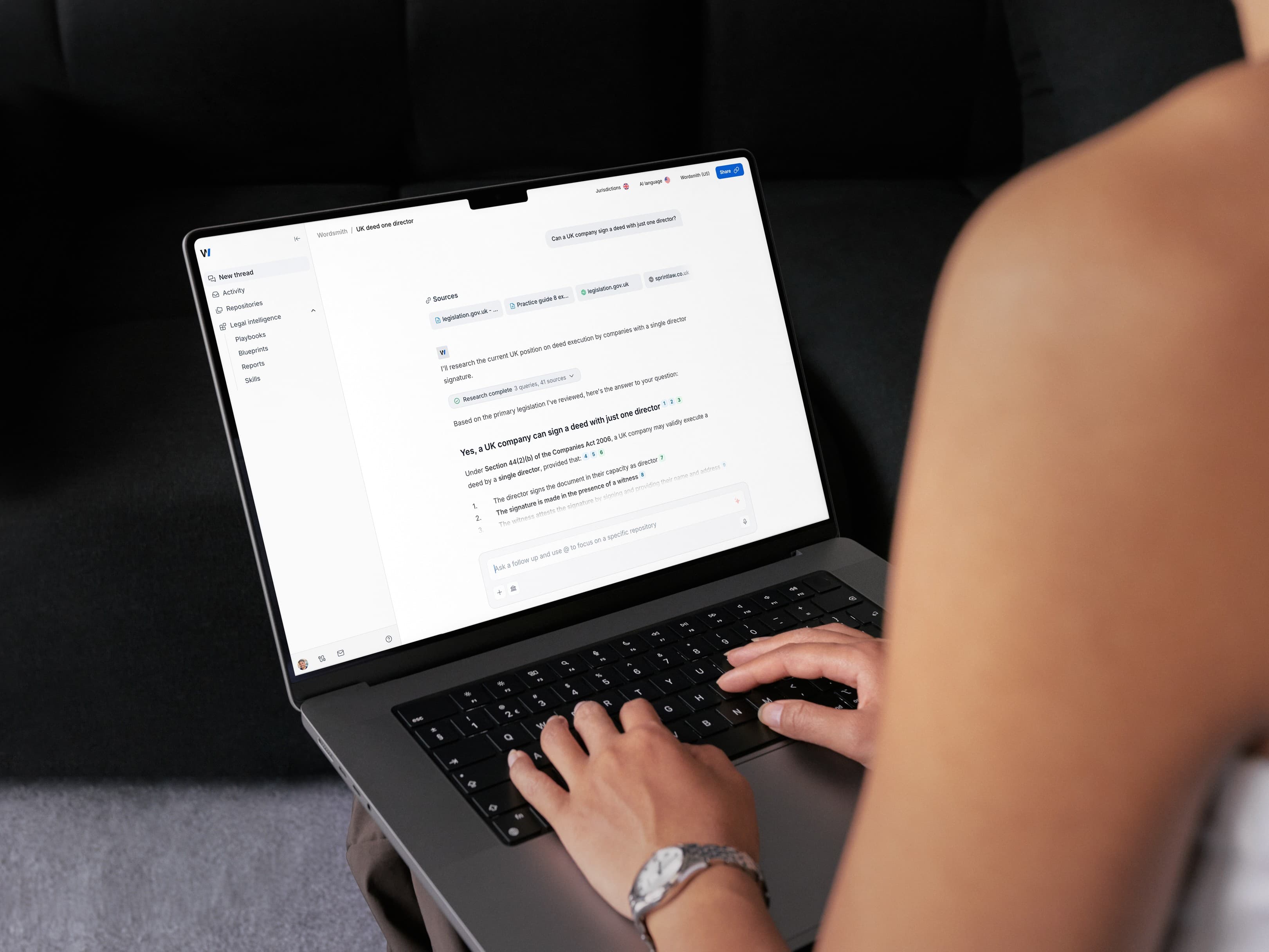
Global legal intelligence built around your business, hundreds of trusted sources across 130+ jurisdictions, combined with deep knowledge of your entities, risk profile, and prior positions.
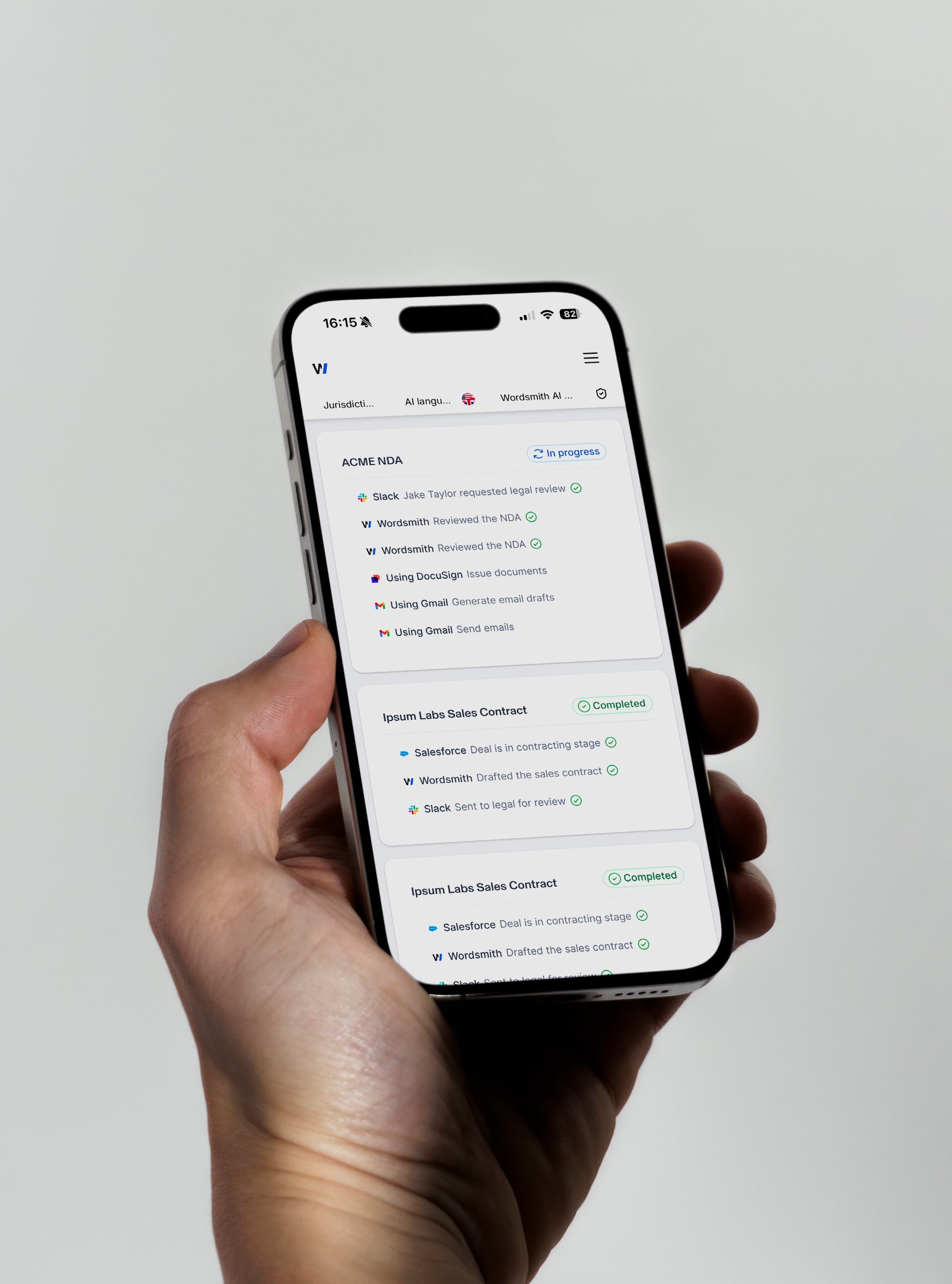
Chain drafting into a full end-to-end workflow. Receive the request, draft the document, route for approval, and send. No manual step required.
AI can take real weight off an in-house legal team, from first-pass contract review to the routine questions that eat your week without ever touching your real expertise.
The hard part is choosing well.
For a legal team inside a regulated firm, the stakes sit higher than almost anywhere else. The tools were built for different buyers, the claims are hard to check, and a wrong answer can become a regulatory problem rather than an awkward email.
Most financial firms already use AI, and well over half of in-house legal teams do too, usually before anyone has written a policy for it. In our work across the sector, the same questions come up. This guide is built for whoever answers for it when something goes wrong.
"Legal AI" covers three areas, each built for a different buyer. Work out which one matches your job before you look at features.
So where does the legal team within a financial services firm fit? Mostly the third category. An in-house function has a specific job: absorb what the business sends, keep risk and cost under control, and show its work to a regulator.
That points to tools built to run the function, more than to tools that produce legal output or speed up a single desk.
It is not absolute. A team handling heavy specialist work in-house, like complex transactions or litigation, will still lean on specialised legal research tools for that depth. And most people keep a general copilot open for quick drafting. Those are useful supplements.
But the tool your function depends on day to day, the one that routes work, applies your playbooks, and leaves an audit trail, is the in-house type. Start there, and add the others where the work calls for it.
All firms within financial services are defined by the regulations. And in a regulated firm, buying a tool is a governance decision as much as a procurement one, and your control functions will have a view before anything goes live.
Pin these down early, because they decide whether the tool gets past your risk committee:
None of this should scare you off. It should shape who you buy from: a vendor who has done this before and can talk it through without flinching.
Because legal AI is still a young market, many vendors do not yet hold these, so treat security is not granted. A vendor selling into financial services should be able to hand them over without fuss.
Treat these as a starting point. They show a vendor takes security seriously, but on their own they do not make a tool right for your firm.
Even the best purpose-built tools still get one in five to one in three answers wrong, and general chatbots fail far more often as they search the entire web, not specific sources.
The errors that hurt you are the confident ones: good work on the surface, polished enough to clear review. In a regulated setting, that is how a small slip becomes a reportable one.
So buy a tool built to be checked. It should answer from your own documents and trusted sources, then cite exactly where each answer came from, so any claim takes seconds to verify.
None of this is fine print when you are regulated. Before the features, get straight answers on these things:
When AI projects flop, the technology is rarely the culprit. They flop because the thing goes unused: it never fits how the work flows, nobody got trained, and after launch nobody owned it.
Head that off with a proper pilot on your own matters, not the vendor's demo cases, and agree what success looks like before you begin.
Put it in front of the people who will use it daily, and track what matters to you.
There is no universal right answer. Much of it rides on your goals, your appetite for risk, and what you already run.
The good buyers do the homework. They get specific about the problem before drawing up a shortlist, and they pressure-test a vendor's claims rather than take them on faith. Security, accountability, and adoption get as much of their attention as the features that shine in a demo.
Get that right, and AI becomes something the whole function leans on, rather than one more login nobody opens.
Wordsmith published this guide. We build AI for in-house legal and compliance teams, the third category described above: one place for the business to send legal requests, with routing, playbooks, a human on the judgment calls, and a record of every step. Most of the teams we work with are in regulated industries, financial services among them, which is where the questions in this guide come from.
We have kept this guide vendor-neutral, so this section is the one place we talk about ourselves. If it would help to learn more, you can talk to the team here.