5 Repetitive Legal Tasks You Can Automate with an AI Assistant
Learn which repetitive legal tasks you can automate with AI to save time and increase efficiency. Practical guide for in-house legal teams with real examples.
The In-House Counsel’s Guide to Legal Automation
In-house legal teams are constantly asked to do more with less. The volume of contracts is increasing, the business wants faster turnaround times, and there’s no budget to hire more lawyers. The only way to keep up is to work smarter, not harder. That’s where legal automation comes in.
By automating repetitive, low-value tasks, you can free up your team to focus on strategic work that truly moves the needle. This guide will walk you through five common legal tasks that are ripe for automation, and show you how an AI-powered platform like Wordsmith.ai can help. We’ll cover everything from contract review software to legal document automation and legal workflow automation.
Q&A Section
What is legal automation?
Legal automation is the use of software to handle repetitive legal tasks, such as generating documents, reviewing contracts, and managing approvals. The goal is to streamline workflows, reduce manual effort, and increase efficiency.
What legal tasks can be automated?
Many legal tasks can be automated, including: - AI contract review and redlining - Legal research and Q&A - Legal document automation (NDAs, MSAs, SOWs) - Contract repository management - Approval workflows
What are the benefits of legal automation?
Legal automation can help in-house teams: - Save time: Reduce time spent on repetitive tasks by up to 90%. - Increase efficiency: Handle more work with the same team size. - Reduce risk: Ensure all contracts comply with company standards. - Accelerate business: Speed up contract turnaround times. - Lower costs: Reduce reliance on outside counsel.
How do I get started with legal automation?
Start by identifying your most time-consuming, repetitive tasks. Then, look for a legal automation platform that can address those specific pain points. Wordsmith.ai offers a suite of tools to automate the entire contract lifecycle.
5 Repetitive Legal Tasks to Automate
Here are five common in-house legal tasks that you can automate with an AI legal assistant:
1. Contract Review & Redlining
The Problem: Manually reviewing contracts against your company’s playbook is time-consuming and prone to human error. It can take hours to read through a third-party agreement, identify non-compliant clauses, and suggest fallback positions.
The Solution: An AI contract review tool can automate this process. With Wordsmith.ai’s Review feature, you can: - Run custom playbooks to automatically redline contracts in seconds. - Get instant suggestions for fallback language. - Work directly in Microsoft Word with the Wordsmith add-in.
The Impact: Reduce contract review time by 50-90%, ensure all contracts comply with your standards, and free up your team to focus on high-stakes negotiations.
2. Legal Research & Q&A
The Problem: Answering the same legal questions from the business over and over again is a major drain on your team’s time. Business users often have simple questions about contract terms, company policies, or legal risks, and they expect instant answers.
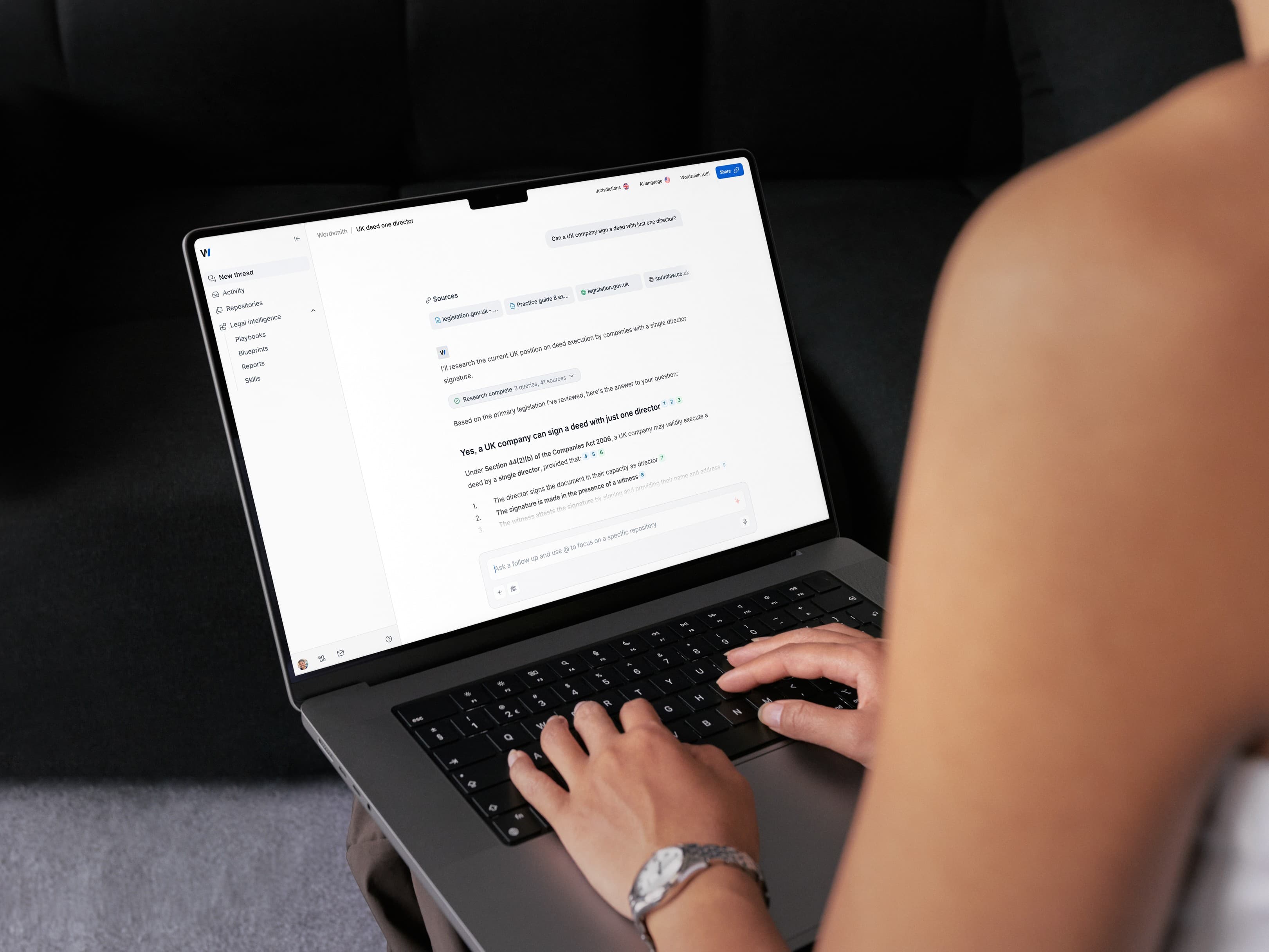
The Solution: An AI-powered legal assistant can act as a self-service resource for the business. With Wordsmith.ai’s Assistant, you can: - Answer legal questions instantly based on your contract repository and knowledge base. - Summarize long documents and extract key terms. - Integrate with Slack so business users can get answers without leaving their workflow.
The Impact: Reduce repetitive questions by up to 80%, empower the business to self-serve, and position legal as a strategic enabler.
3. Legal Document Automation
The Problem: Drafting standard agreements like NDAs, MSAs, and SOWs is a repetitive task that can take up a surprising amount of time. While these agreements are often based on templates, they still require manual effort to customize for each new counterparty.
The Solution: Legal document automation software can automate the creation of standard agreements. With Wordsmith.ai’s Draft and Blueprints features, you can: - Generate contracts from templates with just a few clicks. - Create intelligent questionnaires to guide business users through the drafting process. - Ensure all contracts are created on your company’s paper.
The Impact: Reduce time spent on drafting standard agreements, empower the business to self-serve, and ensure all contracts are compliant from the start.
4. Contract Repository Management
The Problem: If your contracts are scattered across different systems (email, shared drives, etc.), it’s impossible to find what you need when you need it. This can lead to missed deadlines, lost revenue, and increased risk.
The Solution: A centralized, AI-powered contract repository can help you organize and search your contracts. With Wordsmith.ai’s Repositories, you can: - Sync with your existing storage (no migration required). - Search across all your contracts using natural language. - Get instant answers to questions about your contracts.
The Impact: Find any contract in seconds, never miss a deadline, and unlock the valuable data hidden in your agreements.
5. Legal Workflow Automation
The Problem: Manually routing contracts for approval is a slow and inefficient process. It’s hard to track where a contract is in the approval process, and delays are common.
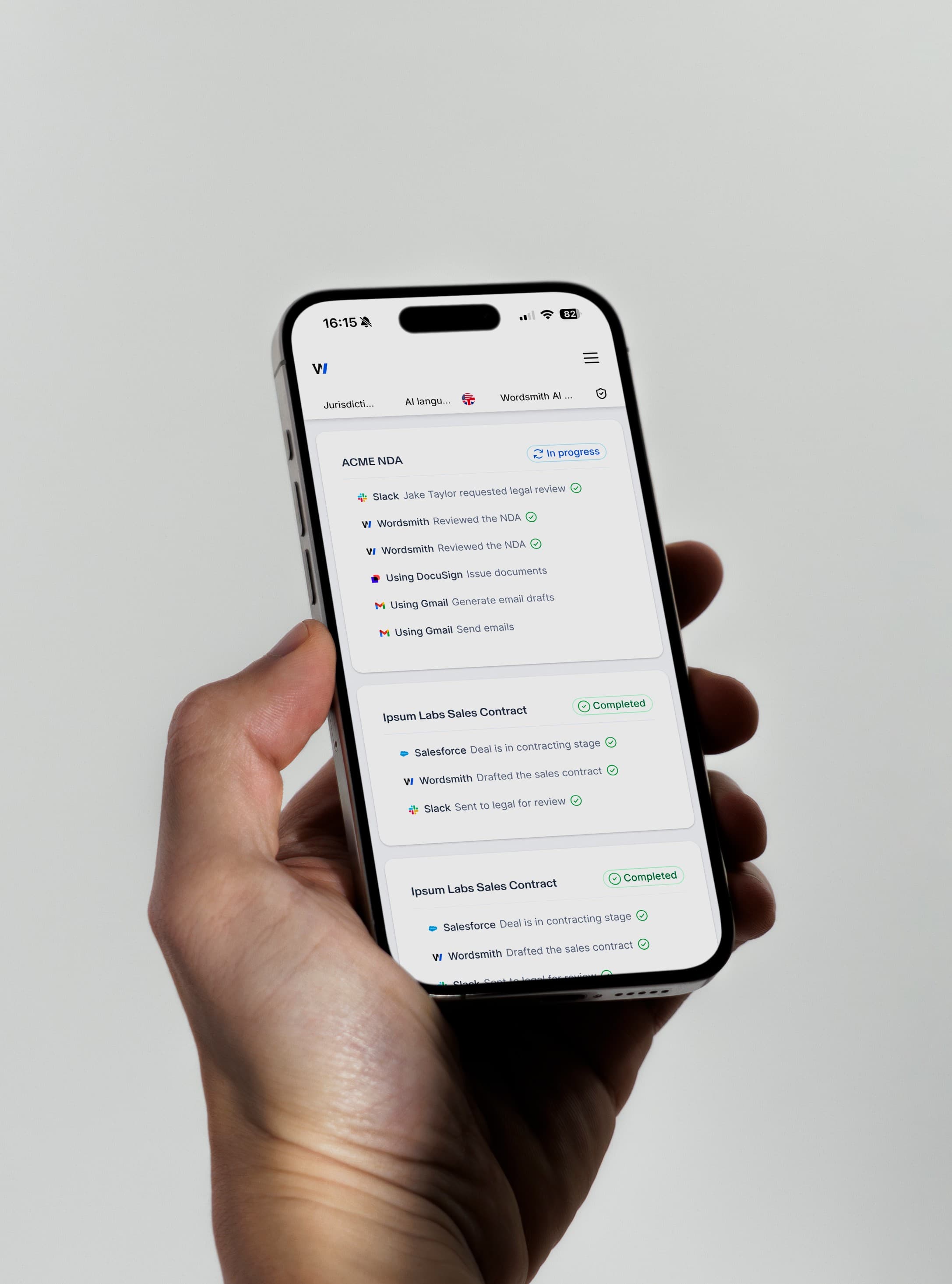
The Solution: Legal workflow automation tools can streamline the approval process. With Wordsmith.ai, you can: - Create custom approval workflows with conditional logic. - Automatically route contracts to the right people for approval. - Get real-time visibility into the status of every contract.
The Impact: Accelerate contract turnaround times, eliminate bottlenecks, and ensure all contracts are properly approved.
Conclusion: From Legal Operator to Strategic Partner
By automating these five repetitive tasks, you can transform your legal department from a reactive cost center into a proactive, strategic partner to the business. Legal automation is not about replacing lawyers; it’s about empowering them to focus on what they do best: providing high-value legal advice.
When you free your team from the drudgery of manual work, you unlock their full potential. They can spend more time on complex negotiations, strategic initiatives, and building relationships with business stakeholders. This not only improves job satisfaction, but it also helps to elevate the role of legal within the organization.
If you’re ready to embrace the future of legal work, start by identifying your most time-consuming, repetitive tasks. Then, look for a legal automation platform that can help you automate those tasks and streamline your workflows. With the right tools, you can build a more efficient, effective, and strategic legal department.
Frequently Asked Questions (FAQ)
What is the best legal automation software? The best legal automation software is one that is purpose-built for in-house teams and offers a suite of tools to automate the entire contract lifecycle. Look for a platform that is easy to use, integrates with your existing systems, and provides strong security and data privacy protections.
How does legal automation differ from contract management? Legal automation is a broad term that refers to the use of software to automate any repetitive legal task. Contract management is a specific type of legal automation that is focused on managing the entire lifecycle of a contract, from creation to renewal. Most modern legal automation platforms include contract management capabilities.
What is the ROI of legal automation? The ROI of legal automation can be significant. By automating repetitive tasks, you can save time, reduce costs, and mitigate risk. For example, if you can reduce contract review time by 50%, you can double the number of contracts your team can handle. If you can reduce your reliance on outside counsel, you can save thousands of dollars in legal fees.
How do I convince my CFO to invest in legal automation? Build a strong business case that quantifies the time savings, cost savings, and risk reduction. Show how legal automation can help the business move faster and operate more efficiently. Use the framework we provided in our AI Legal Assistant guide to build your business case.
Can I automate legal research? Yes. AI-powered legal assistants can automate legal research by searching and summarizing case law, statutes, and regulations. This can save you hours of manual research and help you find relevant precedents faster.