.
Article
Contract intelligence for in-house legal teams: what Repositories unlocks
A guide to getting more out of your contract estate
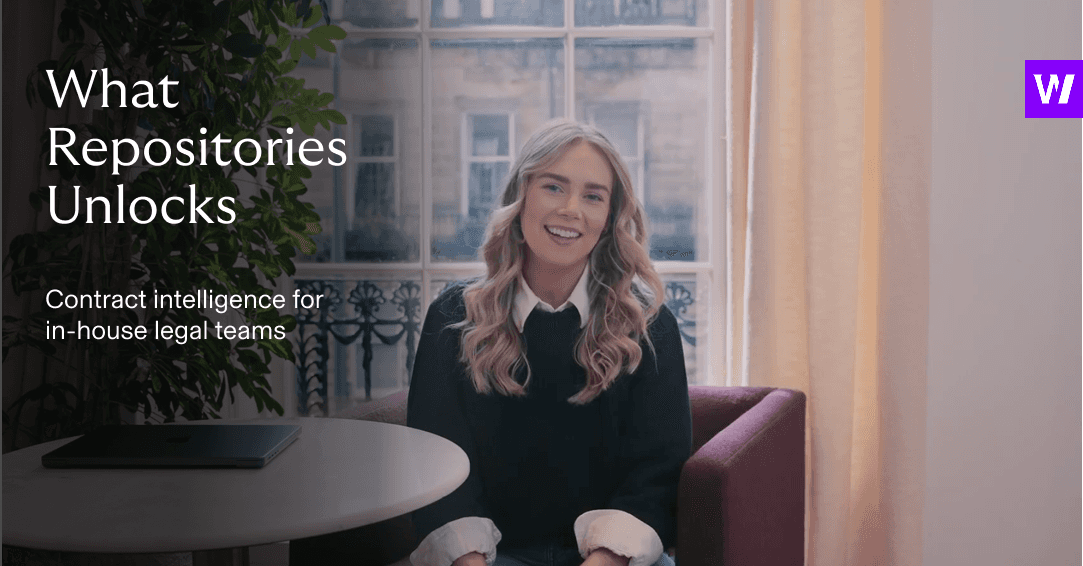
Every in-house legal team has the same problem. It is not that the information does not exist. It is that nobody can get to it.
Your contracts have been accumulating for years. Vendor agreements, MSAs, DPAs, side letters, amendments, board minutes. Thousands of documents sitting in SharePoint folders, Google Drive, legacy contract software. The knowledge is there. It is just completely inaccessible.
So when a new regulation drops and your GC needs to know which contracts are exposed, someone spends three days searching. When a supplier contract auto-renews on terms the business moved on from two years ago, nobody catches it until Finance sees the invoice. When a board member asks about the company's liability position, the answer takes a week to pull together.
The problem is not a lack of contracts. It is that those contracts are doing nothing for you.
What Repositories unlocks
Ask anything across your contract estate.
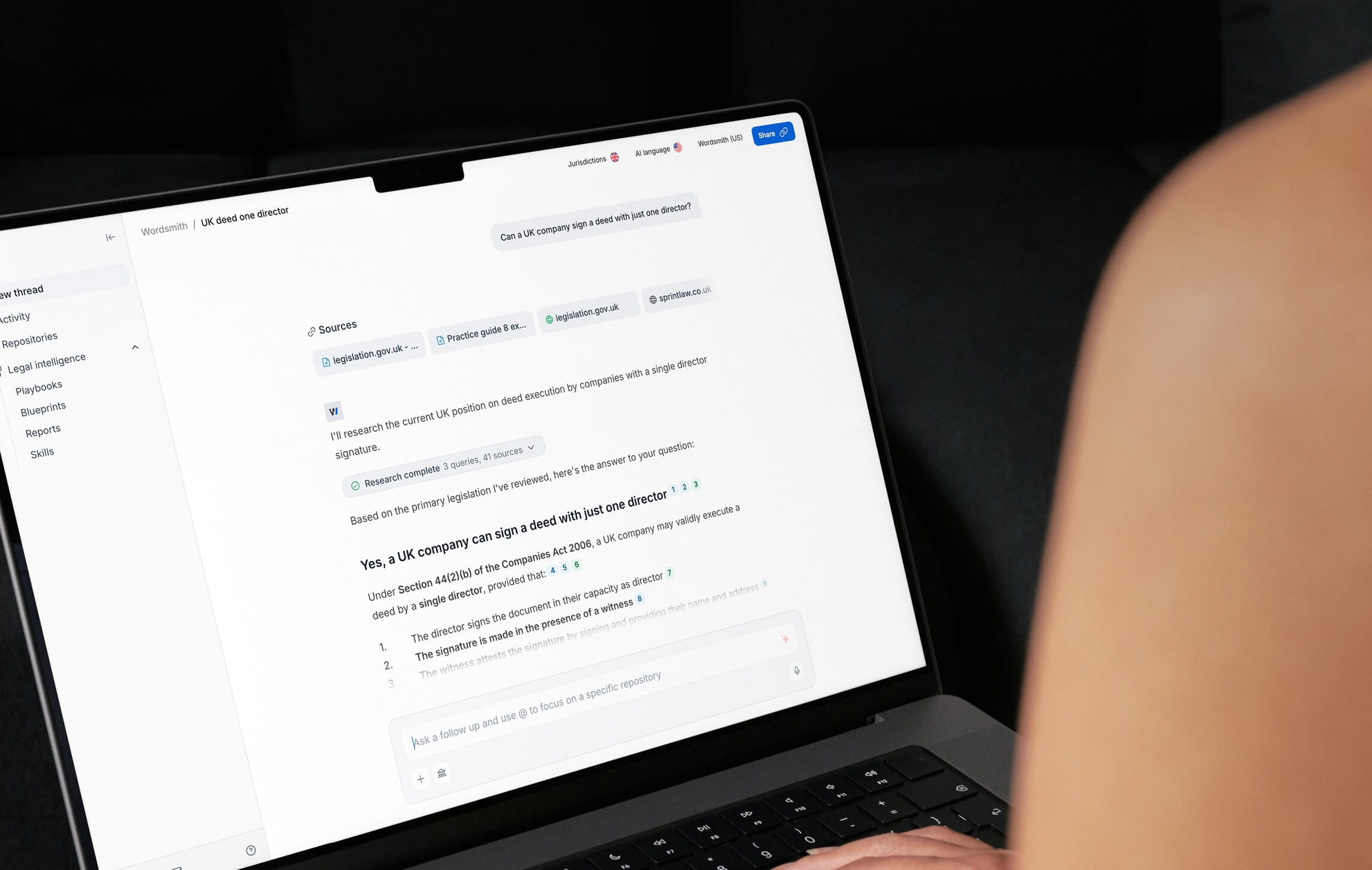
Type a question in plain English and Repositories searches across every contract you have. Which vendors have uncapped liability? Have we ever agreed to a limitation period shorter than 12 months?
For the average enterprise in-house legal team, that question touches hundreds of vendor agreements, multiple storage systems, several jurisdictions, and contracts that stretch back a decade. A financial services firm managing counterparty agreements across multiple markets has thousands. A multinational in manufacturing, food, or enterprise software has supply chain contracts, distributor agreements, and regulatory obligations spanning every market they operate in. At this scale and complexity, business need a legal operating system.
Without Repositories, answering that question means assigning a lawyer to spend two days manually searching folders that haven't been properly maintained in years. Most of the time, it just does not get answered at all, because nobody has the bandwidth and the business learns to stop asking.
With Repositories, the answer comes back in seconds with a citation to the exact clause in the original document. Not a list of files to go and check. Not a best guess. An answer, with a source, across your entire estate. For a legal team managing that kind of scale, this is not a productivity improvement. It is a fundamentally different way of operating.
Never get caught on a renewal again.
The data is stark. Industry research shows businesses consistently lose around 9% through poor contract management. A vendor agreement rolls over on terms the business no longer agrees with because nobody had a clear view of what was expiring and when. Repositories flags every contract approaching its renewal window, 90 days out, automatically. Nothing rolls over silently.
Know what is in your contracts before it becomes a problem.
Every contract that enters your repository is scanned automatically. Unlimited liability clauses. Data protection provisions that no longer meet current regulatory standards. Indemnities that were never supposed to make it through. The moment a high-risk clause comes in, it gets flagged. You are not waiting for a problem to surface in a dispute, Repositories surfaces it at ingestion.
Use cases your legal team will recognise
The board asks about liability exposure in the room. A GC is asked in a board meeting what the company's liability position looks like across its vendor portfolio. Instead of following up after, they open Wordsmith, ask the question, and have a structured answer with source documents in under a minute.
A new regulation lands. Exposure known in hours, not days. A data protection update is announced. Rather than manually reviewing hundreds of agreements, the legal team asks Repositories which contracts contain provisions that no longer meet the new standard. The list comes back immediately. The team knows their exposure before anyone else in the business has noticed.
A new GC joins. Up to speed in days, not months. Understanding the full shape of a company's contract position normally takes months of digging. With Repositories, a new GC can query years of agreements, obligations, and governance history from day one. The institutional knowledge is already there — Repositories just makes it accessible.
The company secretary queries years of board history in plain English. Board minutes, shareholder resolutions, governance decisions going back years, all connected to Wordsmith and queryable instantly. When someone asks what the board's position was on a specific matter three years ago, the answer is there in seconds with a source document attached.
The compounding effect
Once your contract estate is live, everything else gets smarter. Reviews become contextual. Drafting pulls from your real positions. Reports draw from live data.
The intelligence was always there. Repositories puts it to work.
Every in-house legal team has the same problem. It is not that the information does not exist. It is that nobody can get to it.
Your contracts have been accumulating for years. Vendor agreements, MSAs, DPAs, side letters, amendments, board minutes. Thousands of documents sitting in SharePoint folders, Google Drive, legacy contract software. The knowledge is there. It is just completely inaccessible.
So when a new regulation drops and your GC needs to know which contracts are exposed, someone spends three days searching. When a supplier contract auto-renews on terms the business moved on from two years ago, nobody catches it until Finance sees the invoice. When a board member asks about the company's liability position, the answer takes a week to pull together.
The problem is not a lack of contracts. It is that those contracts are doing nothing for you.
What Repositories unlocks
Ask anything across your contract estate.
Type a question in plain English and Repositories searches across every contract you have. Which vendors have uncapped liability? Have we ever agreed to a limitation period shorter than 12 months?
For the average enterprise in-house legal team, that question touches hundreds of vendor agreements, multiple storage systems, several jurisdictions, and contracts that stretch back a decade. A financial services firm managing counterparty agreements across multiple markets has thousands. A multinational in manufacturing, food, or enterprise software has supply chain contracts, distributor agreements, and regulatory obligations spanning every market they operate in. At this scale and complexity, business need a legal operating system.
Without Repositories, answering that question means assigning a lawyer to spend two days manually searching folders that haven't been properly maintained in years. Most of the time, it just does not get answered at all, because nobody has the bandwidth and the business learns to stop asking.
With Repositories, the answer comes back in seconds with a citation to the exact clause in the original document. Not a list of files to go and check. Not a best guess. An answer, with a source, across your entire estate. For a legal team managing that kind of scale, this is not a productivity improvement. It is a fundamentally different way of operating.
Never get caught on a renewal again.
The data is stark. Industry research shows businesses consistently lose around 9% through poor contract management. A vendor agreement rolls over on terms the business no longer agrees with because nobody had a clear view of what was expiring and when. Repositories flags every contract approaching its renewal window, 90 days out, automatically. Nothing rolls over silently.
Know what is in your contracts before it becomes a problem.
Every contract that enters your repository is scanned automatically. Unlimited liability clauses. Data protection provisions that no longer meet current regulatory standards. Indemnities that were never supposed to make it through. The moment a high-risk clause comes in, it gets flagged. You are not waiting for a problem to surface in a dispute, Repositories surfaces it at ingestion.
Use cases your legal team will recognise
The board asks about liability exposure in the room. A GC is asked in a board meeting what the company's liability position looks like across its vendor portfolio. Instead of following up after, they open Wordsmith, ask the question, and have a structured answer with source documents in under a minute.
A new regulation lands. Exposure known in hours, not days. A data protection update is announced. Rather than manually reviewing hundreds of agreements, the legal team asks Repositories which contracts contain provisions that no longer meet the new standard. The list comes back immediately. The team knows their exposure before anyone else in the business has noticed.
A new GC joins. Up to speed in days, not months. Understanding the full shape of a company's contract position normally takes months of digging. With Repositories, a new GC can query years of agreements, obligations, and governance history from day one. The institutional knowledge is already there — Repositories just makes it accessible.
The company secretary queries years of board history in plain English. Board minutes, shareholder resolutions, governance decisions going back years, all connected to Wordsmith and queryable instantly. When someone asks what the board's position was on a specific matter three years ago, the answer is there in seconds with a source document attached.
The compounding effect
Once your contract estate is live, everything else gets smarter. Reviews become contextual. Drafting pulls from your real positions. Reports draw from live data.
The intelligence was always there. Repositories puts it to work.
BOOK A DEMO
Ready to transform your
legal department?
See how the world's leading legal teams are building the future of in-house legal.

BOOK A DEMO
Ready to transform your
legal department?
See how the world's leading legal teams are building the future of in-house legal.
FEATURE SECTION
Explore

Copyright © 2026 Wordsmith AI. All rights reserved. WORDSMITH is a registered trade mark of Wordsmith Law LLP and is used under licence.
Copyright © 2026 Wordsmith AI. All rights reserved. WORDSMITH is a registered trade mark of Wordsmith Law LLP and is used under licence.