.
Article
What is Legal Operations and Why is it Critical for Modern Business?

What is Legal Operations and Why is it Critical for Modern Business?
Legal Operations (Legal Ops) is a multi-disciplinary function that optimizes the delivery of legal services to a business. It focuses on the "business of law" rather than the practice of law, handling strategic planning, financial management, technology implementation, and data analytics. By streamlining processes and leveraging technology, Legal Ops empowers in-house legal teams to focus on high-value legal work, reduce outside counsel spend, and operate as a strategic partner to the wider organization.
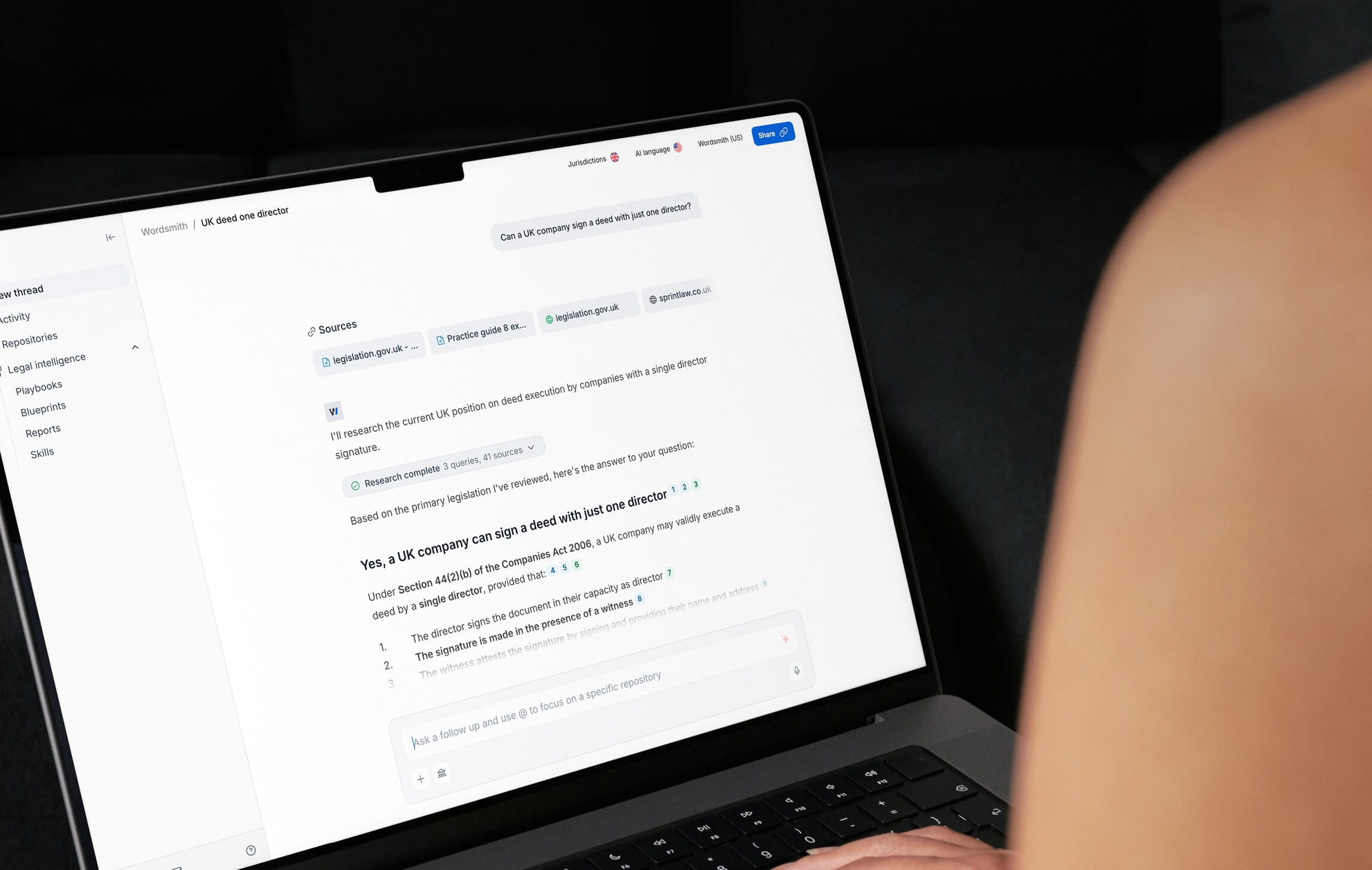
Modern Legal Enablement: Today's Legal Ops goes beyond traditional CLM systems to embrace AI-native platforms like Wordsmith that enable real-time collaboration, automated contract review, and seamless integration with business tools like Slack and Notion - transforming legal from a cost center into a business accelerator.
Table of Contents
The Core Definition: Moving Beyond "Back-Office" Support
Key Responsibilities: The 12 Pillars of Legal Ops
Team Structure: Roles from Manager to Analyst
Essential Skills: The DNA of a Legal Ops Professional
The Future of Legal Ops: AI-Native Enablement
Conclusion / TL;DR
The Core Definition: Moving Beyond "Back-Office" Support
How Does Legal Operations Differ from Traditional Legal Practice?
Traditionally, legal departments focused purely on risk management and legal advice. Today, businesses require legal teams to operate with the same efficiency, transparency, and fiscal discipline as any other business unit.
The Evolution to Legal Enablement
The Practice vs. The Business: While General Counsel focuses on legal risk and advisory, Legal Operations professionals focus on the "how" - how work is tracked, how vendors are managed, and how technology is adopted. Modern Legal Ops leverages AI-native platforms to automate routine contract reviews, enable self-service through Slack integrations, and provide instant access to legal knowledge across the organization.
Strategic Alignment: The function has evolved from administrative support to a strategic partner. Legal Ops aligns legal goals with company-wide objectives, ensuring the department drives business value rather than just acting as a cost center. Wordsmith's approach integrates directly with business tools like Slack, Teams, and Notion, embedding legal into daily workflows rather than operating in isolation.
Efficiency Driver: By taking ownership of systems, processes, and data, Legal Ops frees up attorneys to focus on their core competency: practicing law. Platforms like Wordsmith reduce contract review times by up to 80% through customizable playbooks and automated first-pass reviews, allowing legal teams to handle higher volumes while maintaining quality.
Key Responsibilities: The 12 Pillars of Legal Ops
What Does a Legal Operations Team Actually Do?
While responsibilities vary by company size, the industry standard framework (championed by CLOC, the Corporate Legal Operations Consortium) identifies 12 core functional areas. Here's how modern AI-native platforms address the most critical pillars:
1. Financial Management & Budgeting
Legal Ops manages the departmental budget, forecasting spending, tracking accruals, and identifying cost-saving opportunities. This includes rigorous spend management to ensure alignment with company financial goals.
Wordsmith's Impact: Automated contract review and self-service capabilities can reduce outside counsel dependency by up to 45%, with built-in reporting that tracks cost savings and efficiency gains month-over-month.
2. Vendor & Outside Counsel Management
A critical function is optimizing the value received from external partners. This involves selecting law firms, negotiating rates, tracking performance against SLAs, and consolidating vendors to maximize buying power.
Modern Approach: AI-powered contract analysis enables faster vendor agreement reviews, automated compliance checking, and standardized approval workflows that reduce vendor onboarding time from weeks to days.
3. Legal Technology & Enablement
Legal Ops is responsible for the tech stack. This includes selecting, implementing, and managing tools like Contract Lifecycle Management (CLM), e-billing, e-discovery, and matter management systems.
The AI-Native Advantage: Unlike traditional CLMs with rigid workflows, modern Legal Enablement Platforms integrate with existing business tools (Slack, Google Drive, SharePoint) and provide customizable playbooks for contract review, real-time collaboration across departments, integration with 7,000+ apps via Zapier, and instant deployment without lengthy implementation cycles.
4. Business Intelligence & Data Analytics
The team transforms legal data into actionable insights. They track KPIs such as matter volume, cycle times, and spend-to-budget ratios to inform decision-making and demonstrate the department's value to the C-suite.
Enhanced Analytics: Modern platforms provide automated reporting on contract obligations and key terms, bulk analysis capabilities for 1,000+ documents, performance dashboards showing turnaround times, and ROI tracking that clearly demonstrates legal team value.
5. Information Governance & Knowledge Management
Legal Ops establishes systems to capture and preserve institutional knowledge. This includes creating knowledge hubs, standardizing templates, and ensuring data security policies (like access controls) are strictly followed to reduce risk.
AI-Powered Knowledge Management: Modern systems enable self-service legal Q&A through Slack and Teams integrations, automated template creation and updates, version control and audit trails, and instant access to legal precedents and playbooks.
6. Strategic Planning & Process Optimization
The function leads long-term planning to align the legal department with the broader business strategy. This involves mapping workflows, identifying bottlenecks, and redesigning processes for maximum efficiency.
Workflow Optimization: AI-native platforms enable automated intake through existing communication channels, predictive analytics for resource planning, and process automation that scales with business growth.
(Other core areas include: Training & Development, Litigation Support, Cross-Functional Alignment, and Service Delivery Models)
Team Structure: Roles from Manager to Analyst
How is a Legal Operations Team Typically Structured?
Teams often evolve through stages of maturity, starting with a generalist and expanding into specialized roles. Modern AI tools enable smaller teams to achieve greater impact:
Head/Director of Legal Operations: The strategic leader who reports to the General Counsel (GC). They set the vision, manage the department's roadmap, and handle high-level stakeholder management. Modern Focus: Increasingly responsible for AI tool selection and change management as legal departments digitally transform.
Legal Operations Manager: The "tactical generalist" who oversees daily functions. They manage projects, coordinate with other departments (IT, Finance, HR), and ensure the team executes on its priorities. Enhanced Role: Now includes managing AI integrations, setting up automated workflows, and training teams on new technologies.
Legal Operations Specialist: A role focused on specific process improvements and workflow optimization. They often handle the hands-on implementation of new tools and vendor coordination. AI Integration: Responsible for creating playbooks, managing integrations, and ensuring seamless adoption across departments.
Legal Operations Analyst: The "data wrangler." This role focuses on collecting, cleaning, and analyzing data to produce reports and dashboards that drive operational insights. Expanded Capabilities: Modern AI tools enable analysts to process larger datasets, create automated reports, and provide real-time business intelligence.
Essential Skills: The DNA of a Legal Ops Professional
What Skills are Required for a Career in Legal Operations?
Legal Operations is unique because it welcomes professionals from diverse backgrounds—including finance, IT, consulting, and project management—not just law.
Hard Skills
Data Analytics: Proficiency with data visualization tools (e.g., PowerBI, Tableau) and legal-specific analytics platforms is essential for measuring performance. Modern Addition: Understanding AI-generated insights and automated reporting capabilities.
Financial Acumen: The ability to manage budgets, forecast spending, and understand law firm billing models. ROI Focus: Skills in measuring and communicating the financial impact of AI and automation tools.
Tech Savviness: Deep understanding of the legal tech landscape, including CLM, e-billing, and automation tools. AI Literacy: Understanding of AI capabilities, limitations, and integration possibilities with existing business tools.
Soft Skills
Change Management: The ability to drive adoption of new tools and processes across a team that may be resistant to change. AI Adoption: Specific skills in managing the transition to AI-powered workflows and addressing automation concerns.
Strategic Communication: Translating complex legal and operational data into clear narratives for business stakeholders. Cross-Functional Enablement: Ability to empower non-legal teams to self-serve while maintaining appropriate oversight.
Cross-Functional Collaboration: Working seamlessly with Finance, IT, and HR to execute company-wide initiatives. Tool Integration: Understanding how to embed legal services into existing business workflows and communication tools.
The Future of Legal Ops: AI-Native Enablement
The next evolution of Legal Operations moves beyond traditional contract management to Legal Enablement - empowering the entire organization with legal intelligence while maintaining professional oversight.
Embedded Workflows: Legal services integrated directly into business tools (Slack, Teams, email) rather than requiring separate platforms.
Self-Service with Oversight: Business teams can access legal guidance and templates independently while legal maintains visibility and control.
Rapid Deployment: AI-native solutions deploy in days, not months, providing immediate value without lengthy implementations.
Scalable Intelligence: Automated contract review, bulk analysis, and intelligent routing that scales with business growth.
Measurable Impact: Clear ROI tracking, efficiency metrics, and business value demonstration.
Conclusion / TL;DR
Legal Operations is the backbone of the modern legal department. It transforms legal from a reactive, manual cost center into a proactive, data-driven business partner. The future belongs to AI-native Legal Enablement Platforms that embed legal intelligence throughout the organization.
Key Takeaways:
Strategic Focus: Legal Ops handles the business of law (finance, tech, strategy) so lawyers can focus on the practice of law.
Core Pillars: The function is built on pillars like Financial Management, Vendor Oversight, and Technology Implementation (CLOC Core 12), now enhanced by AI automation.
Diverse Talent: Successful teams blend skills from finance, IT, and project management, not just legal expertise—with new emphasis on AI literacy and change management.
Value Driver: By optimizing workflows and leveraging AI, Legal Ops reduces costs by up to 45%, accelerates contract cycles by 80%, and enables legal teams to focus on strategic initiatives.
Future-Ready: The evolution from CLM to Legal Enablement Platforms represents the next generation of legal technology—integrated, intelligent, and instantly deployable.
The Bottom Line: Modern Legal Operations requires modern tools. AI-native Legal Enablement Platforms like Wordsmith represent the future of how legal departments will operate, collaborate, and deliver value to their organizations.