.
Article
The End of Context Switching: How AI Blueprints Accelerate Legal Workflows

The Bottleneck: The "Copy-Paste" Tax
In-house legal teams lose hours every day to "context switching"—moving between Slack messages, emails, policy documents, and Microsoft Word just to draft a single agreement.
Traditional Document Automation tools often fail because they force users to log into a separate portal to fill out a lengthy questionnaire. This friction kills adoption.
The Fix: Drafting Where You Work
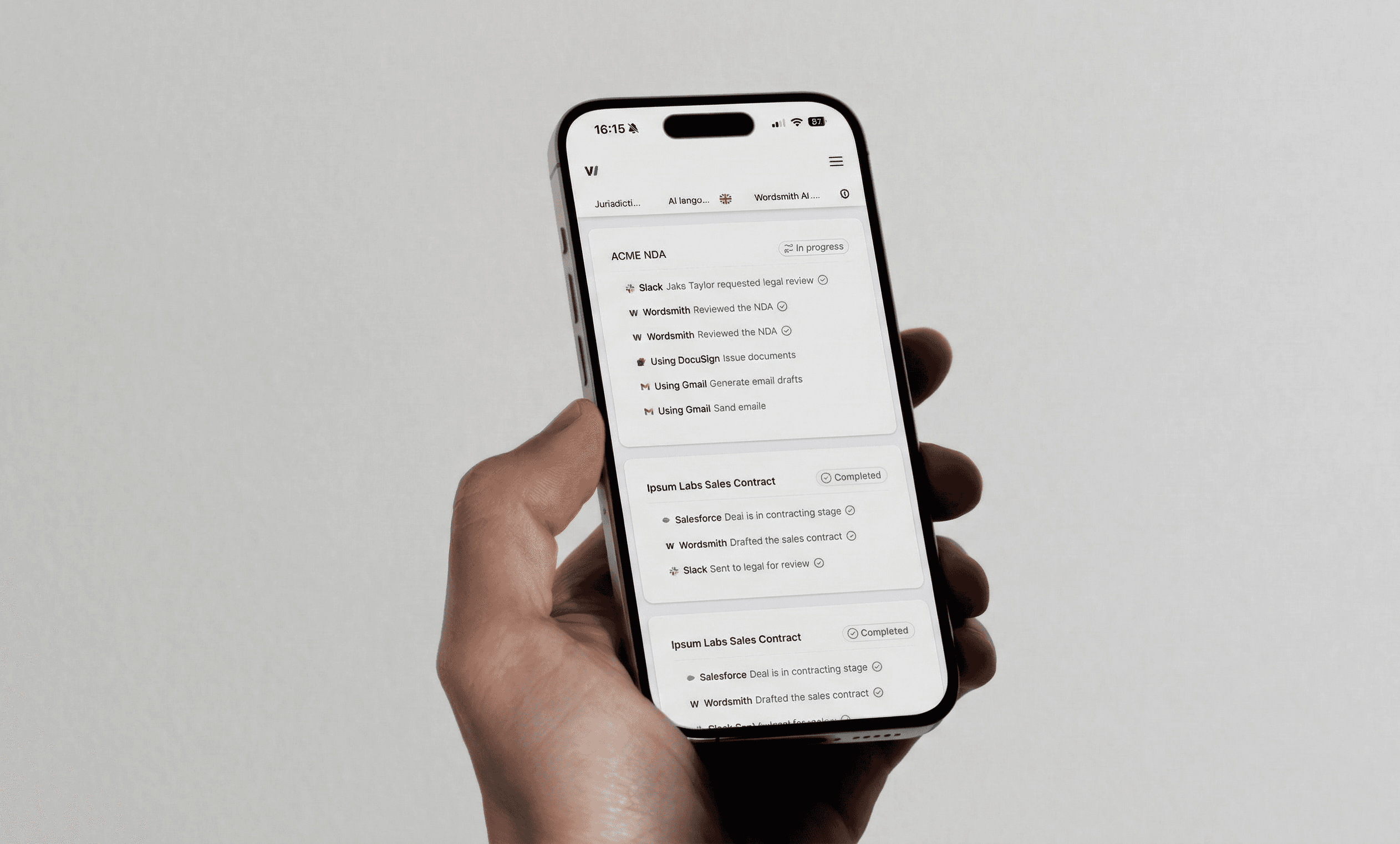
Wordsmith Blueprints are built for real-world legal workflows. They are designed to be triggered directly from where the request originates—whether that is a Slack message from HR or an email from a vendor.
Real-World Application: HR & Employment Lifecycle
Consider an HR workflow. Typically, resolving an employment dispute involves manually gathering details to fill out an ET3 or COT3 form.
The Blueprint Way: The AI pulls employee details, relevant dates, and settlement terms directly from the correspondence and generates the correct document in minutes.
The Result: Zero data entry errors, perfect formatting, and a process that takes minutes rather than hours.
Strategic Value for GCs
By integrating Blueprints into the organization's daily communication channels, GCs ensure that collaboration stays secure and consistent. It allows the business to self-serve on complex documentation without bypassing Legal's guardrails.
Key Takeaway: Efficiency isn't just about speed; it's about removing friction. Blueprints allow legal teams to draft instantly without leaving their workflow.