.
Article
By Why Lawyers Struggle With AI Prompting (And the Simple Fix That Changes Everything)
Getting generic answers from legal AI? The problem isn't the tool—it's your prompt. Learn why lawyers experience "AI amnesia" and how to fix it by treating AI like a junior colleague.

Written by: Laura Jeffords Greenberg - Head of AI Legal Academy
This article is based on an episode of The Only Constant podcast. Listen on Spotify or Apple Podcasts.
Lawyers are trained communicators. They write for judges. They negotiate for a living. They draft with precision, intent, and structure. And yet, when many lawyers sit down in front of AI, something strange happens.
They stop communicating clearly.
The "AI Amnesia" Problem
One of the most common patterns in AI training with lawyers is what I’ve started calling AI amnesia. Highly capable professionals suddenly:
Ask vague questions
Strip away critical context
Assume the AI “knows” what they mean
Accept generic answers they would never accept from a colleague
The output looks polished but feels off. The conclusion is predictable: “This tool isn’t very good.” In reality, the issue isn’t the model. It’s the missing context.
AI Can’t Read Your Mind
Many lawyers subconsciously assume AI understands more than it does. They assume it knows:
Their role
Their company
Their jurisdiction
Their risk tolerance
What “acceptable” looks like
It doesn’t. AI has no grounding unless you give it one. It does not know your internal policies, your deal history, or which risks are business-critical. All of that context lives in your head.
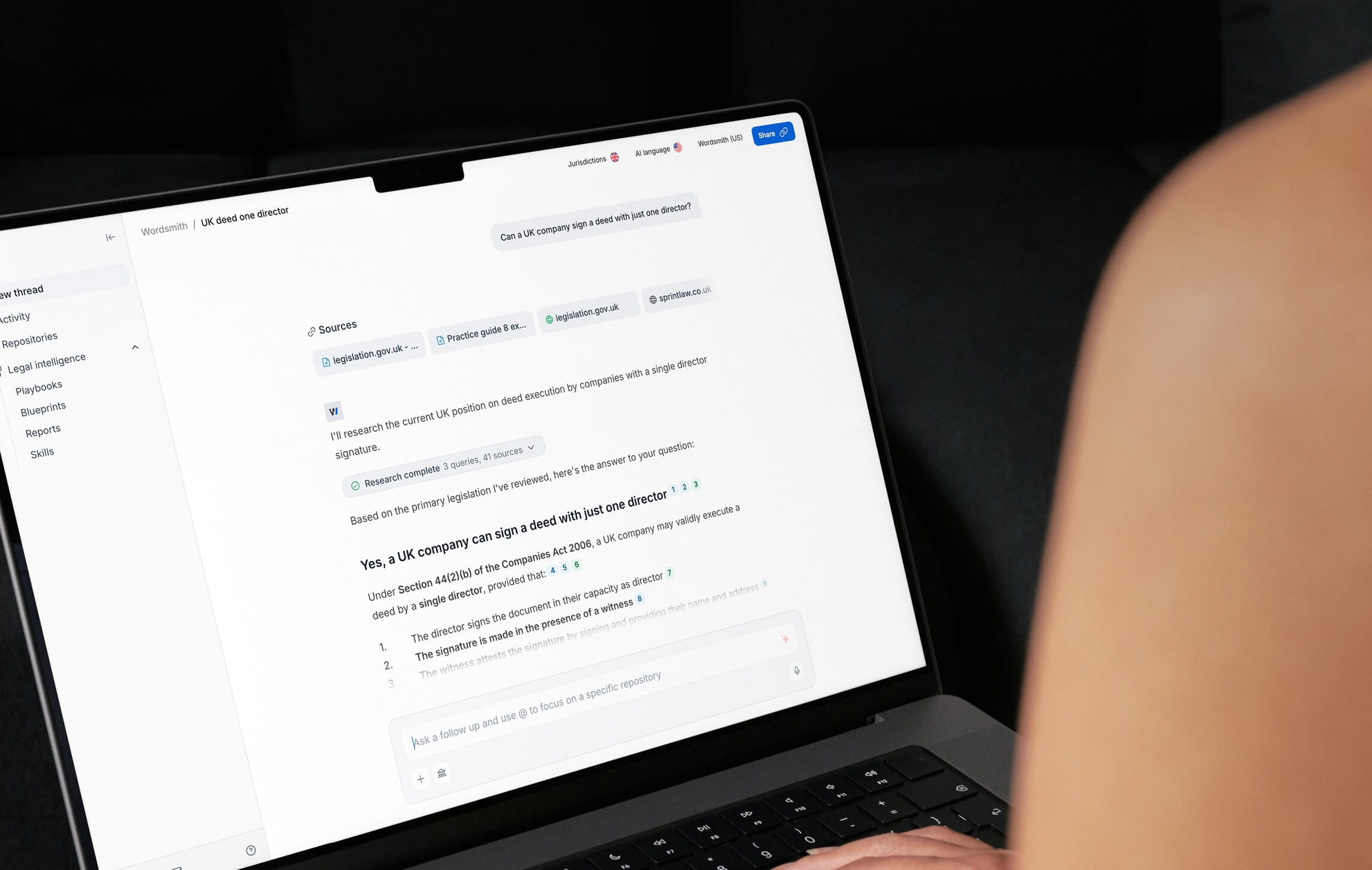
When lawyers ask AI a high-level question without transferring that context, the model fills the gaps with general patterns. The output sounds fluent but feels wrong because it lacks the specifics that actually matter. This is why prompting often feels disappointing. The issue is not that the AI is shallow. It is that the legal context never left the lawyer’s brain.
The Fix: Stop Asking Questions, Start Giving Instructions
The most useful mental shift for lawyers is this: Stop asking AI questions. Start giving it instructions.
Imagine you are delegating a task to a junior colleague who understands the law in theory but doesn’t know your company, the deal history, or which risks you care about. You would never say, “Review this contract and tell me if it’s okay.”
You would explain:
What the document is
Why you are reviewing it
Your role in the deal
The company’s position
What you want back
Prompting works the same way. Good prompting often looks like a clear instruction, followed by a context dump, followed by constraints. If you’ve ever worked across time zones, you know this instinctively. You provide more detail up front because you won’t be there to clarify later. AI is always asynchronous.
Before & After: How Context Changes Everything
The difference between a disappointing AI response and a useful one is rarely the model. It’s almost always the prompt.
Before: The Generic Prompt
“Review this contract and tell me if there are any risks.”
This prompt leaves almost everything unsaid. The AI will respond with a broad list of standard risks. It will sound reasonable. It will also be largely unhelpful.
After: The Same Task, With Legal Context
“You are an in-house commercial lawyer reviewing a SaaS agreement governed by English law.
We are the customer. This is a mid-market deal with a vendor we want to move forward with.
Our priorities are data protection, liability caps, termination rights, and audit rights.
Please review the agreement and:
flag provisions that are outside market for a customer
identify clauses that could create material risk post-signing
distinguish between ‘must-fix’ and ‘nice-to-have’ issues
Do not summarise the entire contract. Focus only on the points that require legal or commercial judgment.”
This prompt does several important things:
Assigns a role
Provides jurisdiction
Clarifies deal context
Defines risk tolerance
Constrains the output
The AI now has enough information to be selective. The output becomes shorter, sharper, and more aligned with how a lawyer actually thinks.
Prompting Is Now a Core Legal Skill
Prompting is not a technical add-on to legal work. It is legal work. It requires clarity of thought, prioritization of risk, and the ability to articulate intent. Lawyers already have these skills. They just need to apply them deliberately when working with AI.
The question is not, “Why isn’t the AI giving me better answers?” The better question is, “What assumptions am I making about what this system already knows?”
When lawyers adjust that mental model, prompting becomes less frustrating and far more effective.
Frequently Asked Questions (FAQ)
Q1: Why do lawyers struggle with AI prompting more than other professionals?
Lawyers are trained to be precise and to avoid ambiguity. Prompting can feel iterative and imprecise, which is uncomfortable. They also often assume the AI has more legal context than it does, leading them to ask overly broad questions.
Q2: What is the single most important thing to include in a legal prompt?
Context. Specifically, your role (e.g., "I am the customer's in-house counsel"), the governing law/jurisdiction, and your primary goal for the review (e.g., "flag deal-breakers," "ensure compliance with our policy").
Q3: How can I get better at prompting?
Practice treating the AI like a new junior associate. Before you ask a question, write down the key context you would give a human colleague. This simple mental shift from "asking" to "instructing" dramatically improves output quality.